
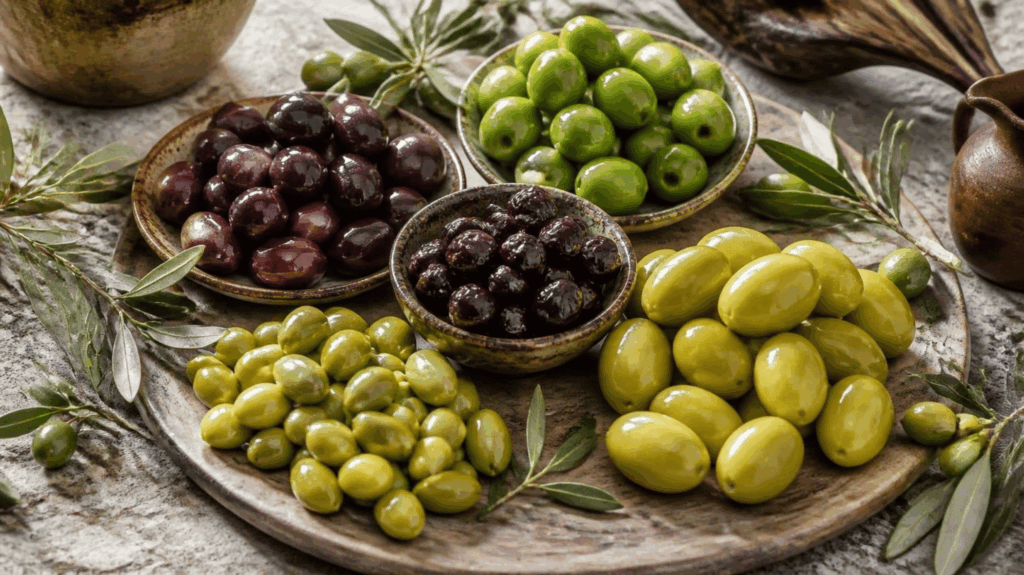
Olives are much more than a garnish or an appetizer. They are a versatile ingredient that can bring saltiness, richness, acidity, texture, and distinctive Mediterranean flavor to everyday cooking. From pasta and pizza to salads, roasted meats, breads, sauces, and charcuterie boards, choosing the right olive can make a noticeable difference in the finished dish.
As a seller of several olive varieties, we believe it is useful to understand that olives are not interchangeable. Each variety has its own flavor, texture, size, and culinary strengths. Our selection includes Pitted Kalamata, Whole Kalamata, Castelvetrano, Picholine, Niçoise, Green Cerignola, and Red Cerignola olives, giving cooks a range of options for both simple meals and more elaborate recipes.
Kalamata Olives
Kalamata olives are among the most recognizable Greek olives. Their dark purple to brown color, almond-like shape, meaty texture, and rich flavor make them particularly well suited to Mediterranean cooking.
Pitted Kalamata olives provide convenience when the olives will be chopped, sliced, blended, or incorporated directly into a dish. Add them to Greek salads, pasta, pizza, grain bowls, focaccia, chicken dishes, and roasted vegetables. They are also an excellent choice for olive tapenade because there is no need to remove the pits before processing.
Whole Kalamata olives are a good choice for antipasto platters, salads, appetizers, and table service. Keeping the pit intact can also help preserve the olive’s firm texture. Whole Kalamatas pair naturally with feta cheese, tomatoes, cucumbers, herbs, olive oil, bread, and roasted meats.
Castelvetrano Olives
Castelvetrano olives are known for their bright green appearance, firm yet buttery texture, and comparatively mild flavor. Their gentle character makes them approachable for people who find some traditional cured olives too salty or intense.
In the kitchen, Castelvetranos work well in salads, pasta dishes, chicken recipes, seafood preparations, and appetizers. Roughly chopped olives can be combined with herbs, garlic, lemon, and extra virgin olive oil to make a simple topping for grilled fish or chicken. They are also well suited to cheese and antipasto boards where their mild flavor complements stronger cheeses and cured foods.
Picholine Olives
Picholine olives are traditionally associated with France and are appreciated for their firm, crisp texture and distinctive green-olive flavor. Their texture makes them particularly useful when you want the olive to retain its character rather than disappear into a recipe.
Slice or chop Picholine olives for salads, pasta, roasted vegetables, poultry, and seafood. They also work well in sauces and relishes made with lemon, herbs, capers, garlic, and olive oil. Served whole, they make an attractive addition to appetizer and cheese boards.
Niçoise Olives
Small, dark Niçoise olives have a pronounced savory flavor that works especially well in dishes inspired by southern France and the Mediterranean.
One of their best-known culinary uses is in salade Niçoise, where olives accompany ingredients such as tomatoes, eggs, green beans, and other traditional components. They can also be used in tapenades, pasta sauces, seafood dishes, braises, and roasted vegetables.
Because Niçoise olives are relatively small, they can distribute olive flavor throughout a dish without becoming the dominant ingredient.
Green Cerignola Olives
Green Cerignola olives are notable for their large size, firm flesh, and relatively mild flavor. Their impressive appearance makes them particularly attractive for antipasto platters and entertaining.
In cooking, Green Cerignolas can be sliced or chopped and added to salads, pasta, chicken, pork, seafood, and roasted vegetable dishes. Their substantial texture also makes them useful when an olive needs to remain recognizable after cooking.
For a simple appetizer, serve them with cheeses, roasted peppers, artichokes, bread, and extra virgin olive oil.
Red Cerignola Olives
Red Cerignola olives offer the same characteristically large size associated with Cerignola olives while providing a distinctive color that makes them especially useful for presentation.
They can be served whole as part of an olive assortment or antipasto platter, or sliced and incorporated into salads and other savory dishes. Combining red and green Cerignolas creates an attractive contrast on serving boards and appetizer trays.
Their size also makes Cerignola olives a natural choice when olives are intended to be a visible part of the presentation rather than simply a background flavor.
Cooking with Olives
One of the advantages of keeping several olive varieties available is the ability to match the olive to the dish. Stronger olives such as Kalamata and Niçoise can stand up to tomatoes, garlic, herbs, meats, and robust sauces. Milder varieties such as Castelvetrano and Cerignola can complement delicate ingredients without overpowering them. Firm olives such as Picholine can provide both flavor and texture.
Olives can be used whole, sliced, chopped, crushed, or puréed. Try them in pasta sauces, pizzas, flatbreads, focaccia, salads, sandwiches, grain dishes, roasted vegetables, chicken, fish, stews, relishes, and tapenades.
When cooking with olives, remember that cured olives already contribute salt to a recipe. Taste the dish after adding the olives before adding additional salt. If a particular olive is saltier than desired, a brief rinse may reduce some of the surface brine, although it can also soften the olive’s intended flavor.
Build an Olive Assortment
There is no single olive that is ideal for every purpose. That is precisely why offering different varieties is worthwhile.
Kalamata brings bold Mediterranean character. Castelvetrano offers a milder, buttery alternative. Picholine provides a firm texture and lively flavor. Niçoise works beautifully in French and Mediterranean preparations. Green and Red Cerignola olives provide impressive size, texture, and visual appeal.
Whether they are served straight from the container, arranged on an antipasto platter, scattered over a pizza, folded into bread dough, simmered in a sauce, or chopped into a tapenade, olives offer cooks an easy way to add distinctive flavor to a meal.
Keeping several varieties in the kitchen makes it possible to choose an olive not simply because a recipe calls for one, but because its particular flavor, texture, and appearance are right for the dish.